

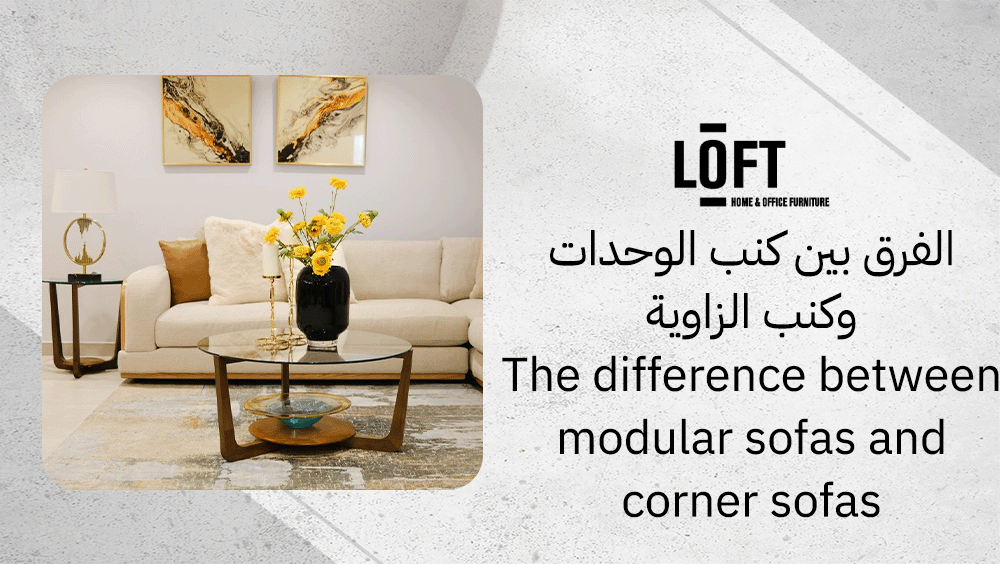
Many of you are searching for the difference between modular sofas and corner sofas to make a practical purchasing decision that fits the space and daily usage needs. Modular or sectional sofas consist of separate pieces that can be rearranged to form an L-shape, U-shape, or straight row, providing significant flexibility when changing the room layout or moving to a new home. In contrast, a traditional L-shaped corner sofa usually comes as a single large piece or two connected units with a fixed design that utilizes corners and offers a spacious seating area in a compact space, but it is less adjustable.
If you are considering adjustable modular seating or a practical alternative to a traditional L-shaped sofa, exploring the options at LoftStore helps you visualize available designs and compare features more clearly. The diverse selection makes it easier to determine what suits your space and daily flexibility needs.
The Difference Between Modular Sofas and Corner Sofas
The term difference between modular sofas and corner sofas refers to a fundamental distinction in design approach and usage. Both provide practical seating solutions, but their assembly method, flexibility, and space requirements differ significantly.
What is a Modular Sofa?
A modular sofa relies on separate units that can be easily assembled and disassembled. This configuration allows the pieces to be arranged in various shapes such as L, U, or a straight line, giving you the freedom to reshape the seating arrangement according to your daily needs. This method facilitates moving each module individually, making the sectional sofa an adaptable choice for changing spaces or homes that require constant flexibility.
What is a Corner Sofa?
A corner sofa typically comes as a single large piece or two fixed connected units. Its design makes use of the room’s corners, forming a fixed L-shaped arrangement that cannot be altered or separated. This type generally maintains a specific shape, making it suitable for spaces that require a consistent seating layout without frequent rearrangements.
Best Options Available at LoftStore
LoftStore offers a variety of sofa designs that combine practicality with modern style, using durable materials and a wide selection that fits different spaces. This is evident in the models offered for both modular and corner sofas, making it easier for customers to choose what fits their daily needs.
Gray Modular Sofa with Two Armrests
This sofa features a flexible modular design that can be easily rearranged to fit the room’s layout and dimensions. Its design uses durable fabric suitable for daily use and long-lasting appearance. Dimensions: 385×319×101×86 cm, suitable for spacious living rooms or areas needing multi-directional seating arrangements.
Brown L-shaped Corner Sofa with Three Seats and Chaise Lounge
This sofa features an L-shaped design in earthy brown, giving a warm presence in the room. It includes three seats with a practical chaise lounge suitable for family gatherings. Dimensions: 332×167×85 cm, with soft, comfortable fabric.
Key Advantages of Each Type
Advantages of Modular Sofas
- Allows easy rearrangement, making the seating adaptable to room size and changing needs.
- Can be expanded by adding new modules without replacing the entire set.
- Easy to move around the home or between rooms due to separate piece distribution.
- Single units can be replaced if damaged, maintaining the overall appearance longer.
Advantages of Corner Sofas
- Efficiently utilizes corners, providing extra space in the room.
- Offers a close-knit family seating arrangement, encouraging interaction.
- Suitable for placement in front of the TV, offering a comfortable viewing angle for everyone.
Space and Layout Considerations
Small Spaces
Choosing a sofa for small areas depends on how well it fits without obstructing movement. Many users consider right or left orientation for corner sofas, typically to maximize usable space, especially near walls, windows, or doors.
The correct orientation depends on pathways and traffic flow to ensure smooth entry and exit.
Short corner sofas can utilize dead corners, freeing space for side tables or small storage units.
In narrow rooms, a slim-depth sofa is preferable to minimize obstruction in main traffic paths.
Large Spaces and Open Layouts
For open-plan areas, modular units offer more flexible arrangements than fixed corner sofas. Units can be rearranged according to lighting, seating flow, or dining zones.
Modular distribution visually divides space without additional partitions or pieces.
The number and direction of modules can be adjusted when hosting guests or changing room function.
In large areas, deeper pieces are preferable to create a visual presence that balances the room’s scale.
Common Sizing Mistakes
Many users only measure length and width, neglecting depth, which affects fit along traffic paths.
It is recommended to leave 70–90 cm of movement space in front of and around the sofa to avoid overcrowding and ensure comfortable navigation.
Flexibility and Reconfiguration
Daily Flexibility of Modular Sofas
Modular sofas can be easily rearranged daily by disassembling certain pieces or changing seating orientation. Individual modules can function as standalone chairs, or multiple sections can be combined to expand seating. This type allows adjusting the arrangement according to changing use or furniture layout, with varying flexibility depending on the design.
Stability of Corner Sofas
Corner sofas provide fixed direction and shape, ideal for consistent layouts. Limited rearrangement can be advantageous when a space is centered around a specific focal point like a TV or large window. Some models allow corner orientation adjustment, but this is not as flexible as full modular reconfiguration, remaining limited to corner direction options.
Comfort and Seating Experience
Depth and Cushion Comparison
Comfort depends on seating depth and alignment with body posture. Deep cushions offer ample support for daily relaxation. Corner sofas provide better weight distribution due to their connected design, while modular units may shift when sitting. Some modular configurations require secure fastening to prevent sliding, affecting seating stability over extended use.
Family Usage
Corner sofas suit daily multi-user usage due to stable seating, while modular sofas offer greater distribution flexibility but may need minor adjustments when seating arrangements change. This difference helps determine the best choice based on family usage needs, whether for a fixed relaxation area or versatile seating.
Maintenance and Durability
Ease of cleaning modular sofas is a key difference, as many designs allow removable covers for easy washing. Individual modules can be replaced if damaged, reducing maintenance costs and extending overall lifespan.
Corner sofas require more careful maintenance due to hard-to-reach inner corners. Connected designs make stain removal and dusting more complex, especially in high-traffic areas.
The lifespan of both types ranges from 7–15 years depending on material quality and usage, according to sources like TheSpruce and Consumer Reports. Regular cleaning and maintenance directly support durability within this range.
Key Considerations Before Purchasing
- Correct orientation ensures a sofa fits your lifestyle and maximizes space without hindering daily movement.
- Choosing durable fabric maintains sofa appearance over time, especially in frequent-use or family spaces.
- Measuring traffic pathways before purchase ensures unobstructed access to all room areas.
- Adding future modules provides flexibility to modify the sofa design as needs evolve, whether to expand seating or rearrange modules.
FAQ: Difference Between Modular Sofas and Corner Sofas
- What are the advantages of a corner sofa?
- Provides practical seating in small spaces, efficiently utilizing corners without extra pieces.
- Types of sofas and their names?
- Includes straight sofas (single or multiple seats), corner sofas for corners, and modular sofas with easily separable and rearrangeable parts.
- Corner sofa dimensions?
- Typically range from small configurations for tight spaces to larger L-shaped setups, chosen based on room size and furniture layout.
- Good sofa specifications?
- Includes sturdy frame, comfortable upholstery, and design suitable for room layout providing proper seating support.
Conclusion
The difference between modular and corner sofas combines full adaptability on one side and fixed design with corner optimization on the other, making the choice directly linked to your home’s space and daily usage patterns. Explore more suitable options at LoftStore to view available designs.